
Keyword cannibalisation
When two of your pages compete for the same search, neither ranks as well as one strong page would. This shows you where it is happening and what to do about it.
What's included
- Flags one keyword pointing to different pages
- Flags similar keywords where two of your pages both rank
- Dismiss intentional pairs and they stay dismissed
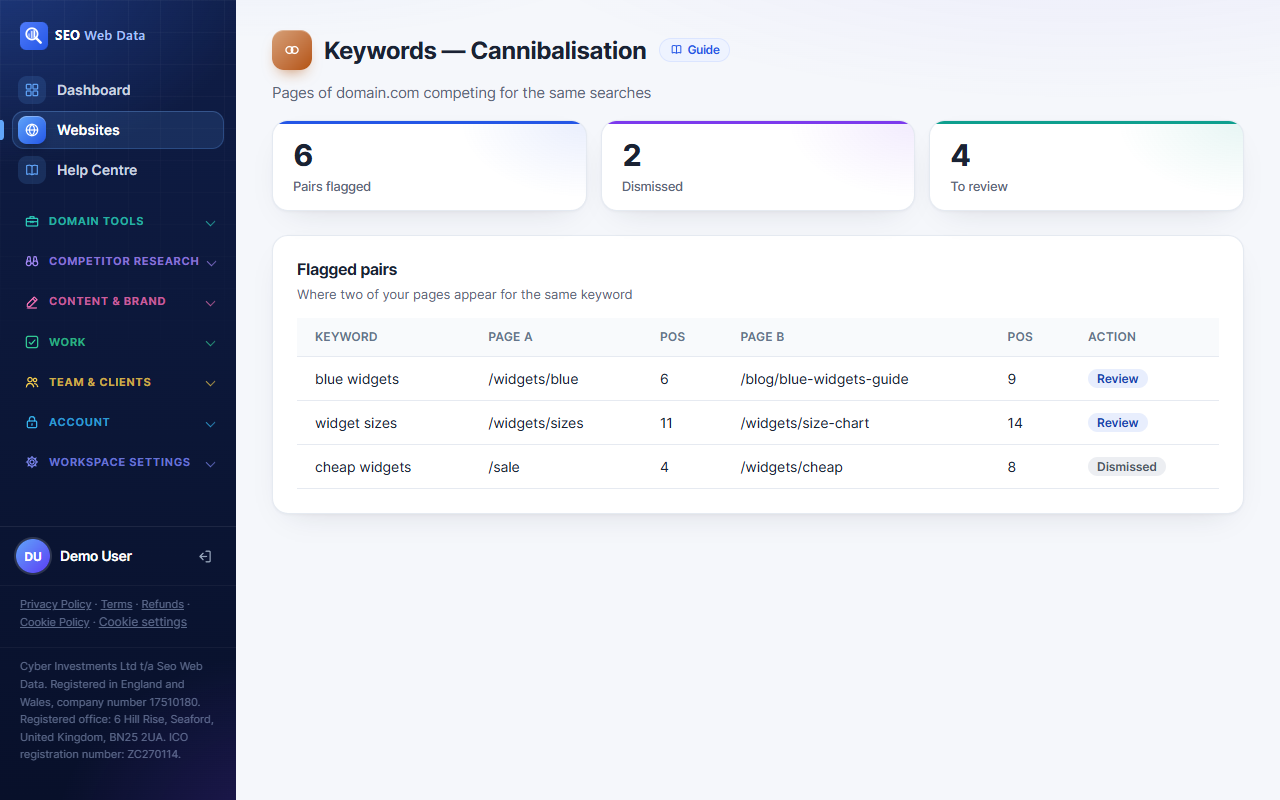
Track keywords with target pages, then run a scan. Each flagged pair shows the keyword, the two pages, and where each one ranks, so you can see at a glance which is the natural main page.
Not every pair is a problem — similar keywords can legitimately need different pages — so you can dismiss the ones you did on purpose and they will not come back.
How it works
The scan compares the pages your tracked keywords rank with. It looks for the same keyword landing on different pages across countries or devices, and for similar keywords where two different pages of yours both appear. It uses rankings you already track, so there is nothing extra to fetch.
What to do with a flagged pair
- Merge the weaker page into the stronger one and redirect it.
- Re-target the weaker page at a different angle so the two stop overlapping.
- Link from the secondary page to the main page, using the keyword as the link text.
What it does not do
The scan is a prompt to look, not a verdict. It cannot tell your intent, so a flagged pair is a candidate to review. It also only sees keywords you track.
Works with the rest of the platform
Combine it with automated keyword tracking for the rankings it reads and search result snapshots to see which page Google prefers.
Frequently asked questions
Is every flagged pair a real problem?
No. Similar keywords can legitimately need different pages. Dismiss those and they stay dismissed.
Does it use extra data credits?
No. It works from rankings you already track.
Which page should I keep?
Usually the one that ranks better, has more links and best matches the search. The scan shows where each one ranks to help you decide.
How often should I run it?
After a batch of new content, and after any site restructure.