
AI Share of Voice & Competitors
See who AI assistants recommend when your customers ask for help — how often you are named compared with your competitors, and which websites the engines rely on.
What’s included
- Up to ten competitors per website
- Named and cited counts for every tracked name
- Share of voice across tracked names
- Most-cited sources across your prompts
Your visibility only means something in context. If an assistant names you in a third of answers, that is excellent when competitors get a tenth and worrying when they get nine tenths. Adding competitors turns a lone percentage into a comparison.
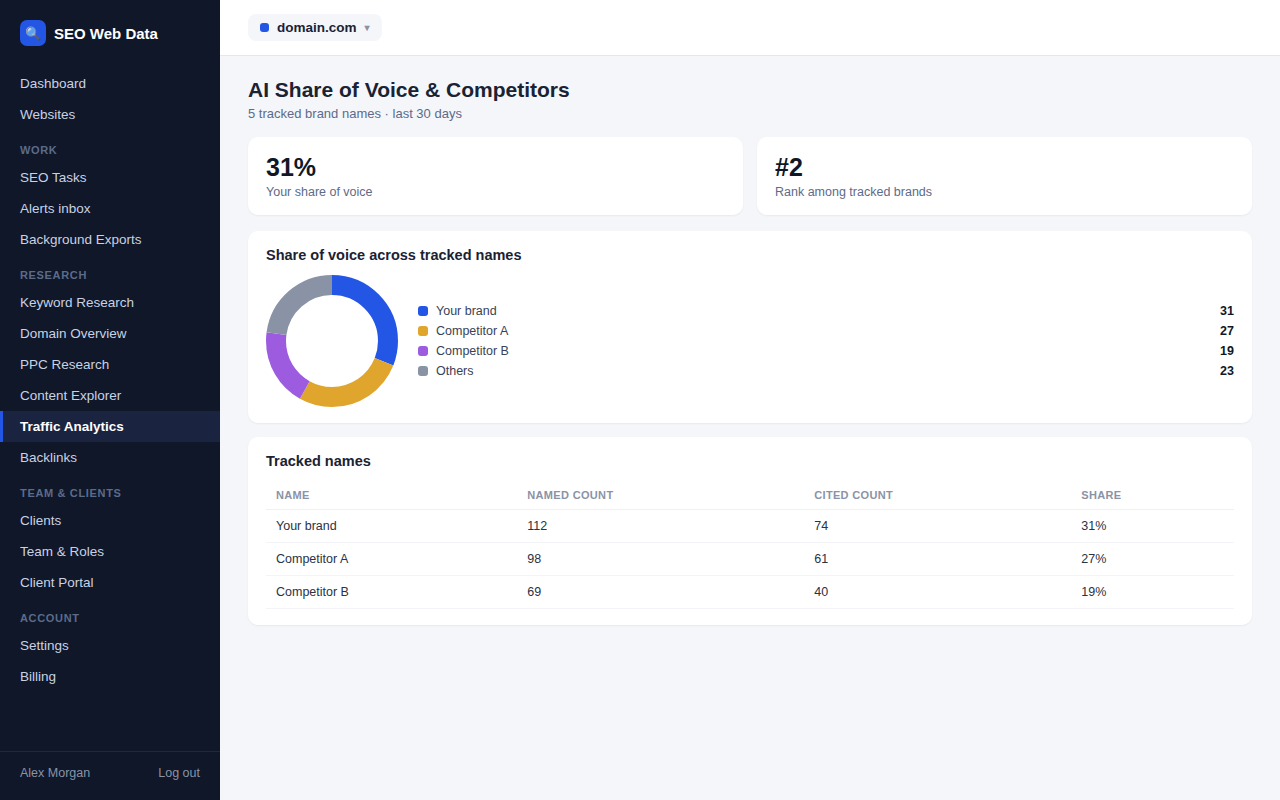
List each competitor with a name and domain, and every answer is checked for them as well as for you. The comparison table shows how many runs named each one and how many cited their domain.
How share of voice works
Share of voice is your slice of the naming. Across the answers in your sample, it compares how often you were named with how often all the tracked names were named. If you and two competitors are named twenty times between you and you account for ten of them, your share of voice is fifty per cent.
When none of the tracked names appears in any answer, the figure is left blank rather than shown as zero. A zero would suggest you had lost a contest that never took place. Add more prompts or broaden your competitor list and the figure fills in once names start to appear.
Choosing competitors
Pick the businesses your customers genuinely compare you with, which is often not the same list as your search competitors. A local firm may compete with national brands in AI answers even if they never share a results page. Use the “other brands” listed in the answer history to spot names you hadn’t considered, and add them as tracked competitors.
- Add each competitor as a name and domain, for example “Competitor One | competitor1.com”.
- Keep the list focused; up to ten competitors can be tracked per website.
- Use the same names across websites for consistent comparisons.
The sources engines lean on
Beside the comparison table sits a list of the domains cited most often across your prompts, with the number of runs in which each appeared. This is one of the most actionable views in the toolkit. It shows which websites shape the answers in your market: review platforms, industry publications, comparison sites, or your competitors’ own guides.
Pages of yours that are missing from the list are your content opportunities. If a comparison article keeps being cited, consider getting listed in it. If a rival’s how-to guide keeps appearing, ask whether you can publish something clearer. The backlinks and competitor intelligence tools show who links to those sources, which helps you work out how to earn a place there.
Keep the comparison fair
Every figure reflects the same prompts, engines, country and language for you and for each competitor, so the comparison is like for like. Because answers vary, treat small differences with caution and look at the trend rather than a single snapshot. The visibility trends page shows how your own numbers move over time.
Using it with clients
Share of voice is an easy number for a client to grasp: out of everyone the assistants recommended, how much was us? Show it at the start of an engagement, then again after a few months of work. If you manage many websites, the same competitor list can be reused for similar clients, and each website keeps its own history, so one client’s results never mix with another’s.
Frequently asked questions
Can I track competitors I don’t have a website for in my account?
Yes. Competitors are simply a name and a domain that the platform looks for in each answer. They do not need to be websites you manage.
Why is my share of voice blank?
None of the tracked names was found in the answers in your sample. Add more prompts or competitors, or run more checks, and the figure appears once names are found.
Does share of voice include the other brands an engine lists?
It compares you with the names you track. Other brands the engine listed are shown separately in the answer history so you can decide whether to track them too.
Where can I see this for a client?
Every website in your account has its own AI Search Visibility page, and read-only team members can view the results without being able to run checks.