
AI Brand Mentions & Citations
Being named in an AI answer and being cited as its source are different wins. See both, for every answer, and read exactly what the engine said about you.
What’s included
- Brand named: yes or no, for every answer
- Domain cited as a source
- Your position among the brands mentioned
- Other brands the engine listed
When an AI assistant answers a question, it may mention your brand by name, link to your website as a source, do both, or ignore you altogether. Each outcome means something different, so the platform records them separately rather than lumping them into one score.
You tell the platform which brand names to look for, including the spellings people actually use, and it checks every stored answer against them. The result is a clear yes or no per run, rolled up into rates you can track.
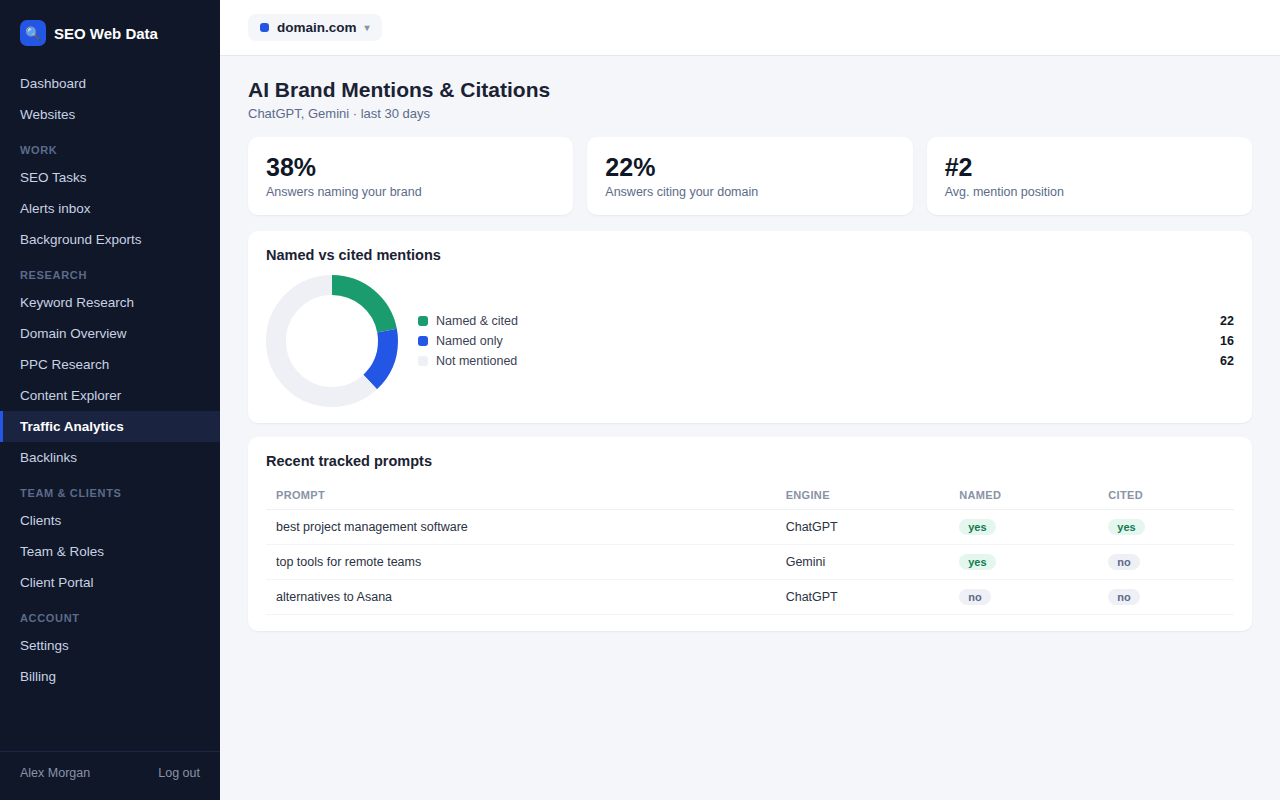
Named is not the same as cited
A brand that is named appears in the words of the answer: “Domain Co is a good option for small teams.” A domain that is cited appears among the sources the engine points to, or is written out in the answer. Being named shows awareness; being cited sends visitors. Many brands are named often but rarely cited, and that gap is exactly what you can work on.
The overview shows three headline rates for the last 30 days: how often you were visible in either way, how often you were named, and how often your domain was cited. Each is shown alongside the number of runs behind it so you can judge how much weight to give it.
Position when named
When you are named, it helps to know whether you came first or fifth. The platform counts how many of the names you track, meaning you and the competitors you list, appeared earlier in the answer text. A position of 1 means you were named first. It is not a search rank, and it only describes the answers in your sample, but a rising average position is a good sign that engines are placing you higher in their recommendations.
Read the answers themselves
Numbers only tell part of the story. Every prompt has its own history page showing each stored answer with the time it was run, badges for whether you were named or cited, the competitors that appeared, and any other brands the engine listed. You can open the full answer text and the list of cited sources to see the wording for yourself.
That matters because the way you are described is as important as whether you are described. If an answer calls you expensive, out of date or the wrong fit for a certain customer, you have learned something no rank tracker would have told you.
Getting the brand names right
Matching works on whole words and ignores capitalisation, so “domain co” and “Domain Co” both count. Add each variation people use, for example a short form, a common misspelling or the name with and without “Ltd”. Very short or generic names can cause false matches, which is why the settings page suggests being specific.
- Use up to ten brand terms per website.
- Include the domain name itself, since engines often write it out.
- Avoid single common words that appear in unrelated answers.
From findings to fixes
If you are rarely cited, look at the pages the engines do cite in your most-cited sources and ask what they offer that yours don’t. Clear, well-structured pages that answer the question directly are a good place to start, and the content and AI tools can help you find gaps. Once a change is live, re-run the prompt from prompt tracking and see whether the answer moves.
Frequently asked questions
Does a citation always mean a link?
A citation means your domain appeared among the sources the engine listed, or was written out in the answer. Whether the engine presents it as a clickable link depends on the engine and how it displays its sources.
Why was my brand missed when I know it exists?
AI answers vary from run to run, and by location and model version. One missed run doesn’t mean you’re never mentioned, which is why the figures are shown across several runs.
Can I check for common misspellings?
Yes. Add each spelling as a brand term for the website, up to ten in total.
Are other brands in the answer shown?
Yes. Alongside your tracked competitors, the answer history lists other brands the engine mentioned, which is a handy way to discover competitors you had not thought of.